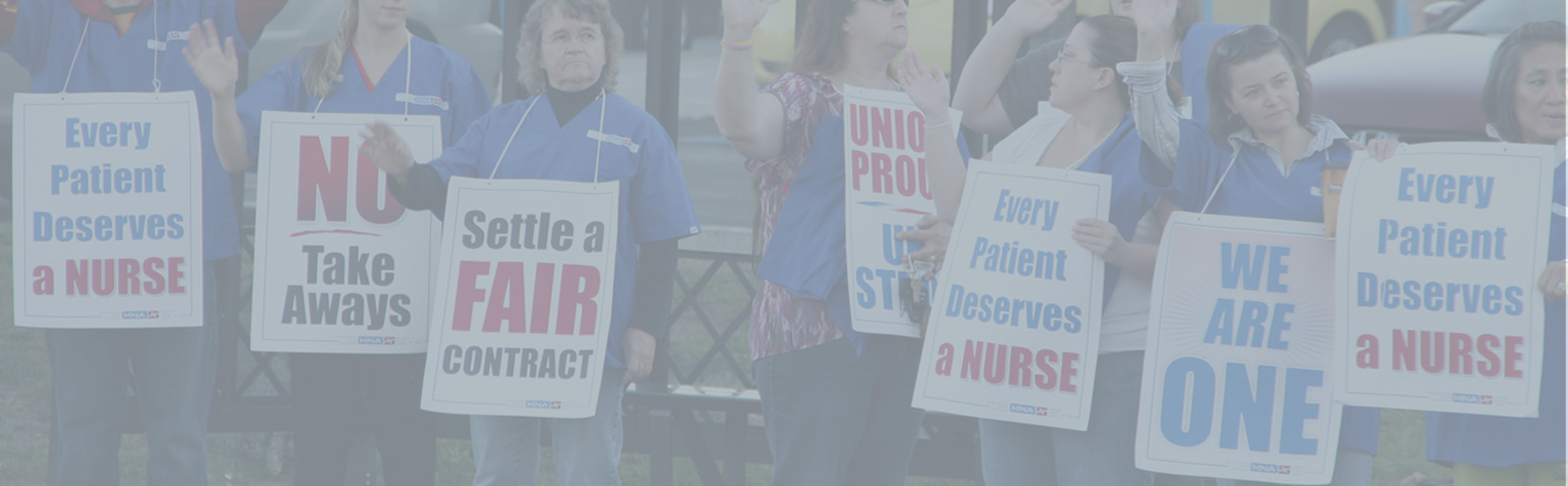
Unresolved Baystate Franklin nurse contract issues include safe staffing in the ED and MHU, affordable health insurance and fair compensation for mandatory on call
GREENFIELD, Mass. – Registered nurses at Baystate Franklin Medical Center (BFMC), represented by the Massachusetts Nurses Association (MNA), will deliver a letter on September 15 to Baystate Health Board of Trustees Chair Dr. Akinyele Lovelace urging him and other trustees to help settle a fair union contract that improves nurse staffing to protect local care. BFMC nurses have been negotiating with Baystate for a year. Their next negotiation session – the 27thsince bargaining began – will be on September 16.
LETTER DELIVERY DETAILS
What: Baystate Franklin nurses deliver letter to Baystate Health Board Chair Dr. Akinyele Lovelace calling for his leadership in settling a fair contract
When: Tuesday, September 15 at 9 a.m.
Where: 75 Springfield Rd, Suite #1, Westfield
Details: Baystate Franklin nurses delivering their letter; interviews with BFMC nurses.
“Baystate Franklin nurses are asking the Baystate Health Board Chair to use his leadership position to address issues that directly affect our ability to provide safe, high-quality care,” said Suzanne Love, Emergency Department RN and Co-Chair of the MNA Bargaining Committee. “We are asking Dr. Lovelace and the Baystate trustees to help bring these negotiations to a fair conclusion while helping to protect patient safety and keep care local.”
The nurses’ letter outlines three primary remaining contract issues:
- Safe staffing, including an eighth nurse in the Emergency Department from 3 p.m. to 11 p.m. and restoration of dedicated 12-hour Admission Nurse coverage in the Mental Health Unit.
- Affordable health insurance, with contractual protection against excessive premium increases that could erode nurses’ wage gains over the life of the agreement.
- Fair mandatory on-call compensation for surgical services nurses who must remain available to respond immediately to life-saving emergencies.
Following a 98.2% strike authorization vote in April, BFMC nurses voted 98% on June 11 to reject Baystate Health’s “best and final” contract proposal. Since then, nurses and Baystate have narrowed their differences and reached tentative agreements on important issues, including competitive wages intended to support nurse recruitment and retention and staffing language for medical-surgical units.
The remaining issues are essential to ensuring Franklin County residents continue to have access to safe, timely care close to home.
“Our community deserves a local hospital with enough nurses and frontline staff to care for patients when they need us,” said Marissa Potter, RN and Co-Chair of the MNA Bargaining Committee. “We are asking Baystate’s Board of Trustees – including Dr. Lovelace who cares for patients at Baystate Franklin – to recognize our concerns and help us settle this contract.”
Throughout their contract campaign, BFMC nurses have received significant community support. More than 700 community members signed a petition supporting the nurses, the Greenfield City Council unanimously approved a resolution backing their fight for a fair contract and safe patient care, and patients and local residents have continued speaking out about the future of healthcare in Franklin County.
Nurses have also raised concerns about reductions in hospital services and staffing. In July, they filed a formal complaint with the Massachusetts Department of Public Health over Baystate’s elimination of evening patient transport services, warning that the cuts force nurses away from bedside care and can delay patient movement, testing and treatment.
-###-
MassNurses.org │ Facebook.com/MassNurses │ Twitter.com/MassNurses │ Instagram.com/MassNurses
_________________________________________
Founded in 1903, the Massachusetts Nurses Association is the largest union of registered nurses in the Commonwealth of Massachusetts. Its 26,000 members advance the nursing profession by fostering high standards of nursing practice, promoting the economic and general welfare of nurses in the workplace, projecting a positive and realistic view of nursing, and by lobbying the Legislature and regulatory agencies on health care issues affecting nurses and the public.